


It doesn't quite look like a breakout mark or sun damage, and it doesn't behave like them either. It fades a little, then comes back. It gets worse in summer. Concealer covers it but nothing seems to fully clear it.
If you’ve been dealing with melasma for a while, you’ve likely noticed the pattern. Here's what's actually behind it.

What is melasma?
Melasma is a form of hyperpigmentation caused by a combination of UV and light exposure, hormonal sensitivity, and genetics.
What makes it especially stubborn is its depth. While some melasma sits in the upper layers of the skin, it often extends deeper into the dermis—a layer standard over-the-counter topical skincare struggles to reach.
You can be consistent with products, hit real improvement, and still plateau. Not because the routine isn't working, but because the pigment isn't where those products can get to.

What makes it worse
UV and visible light
Light exposure is the strongest trigger for melasma. Even brief, incidental UV exposure can stimulate melanocytes and deepen existing pigmentation. Visible light plays a role too, which is why melasma can worsen even when you've been careful with sunscreen. SPF is non-negotiable, but it's rarely enough on its own.
Heat
Infrared heat independently triggers melanocyte activity, separate from UV entirely. Hot showers, steam, spending time near a stove, or sitting in a warm car can activate pigment without any sun exposure at all. This is one of the more overlooked reasons melasma is difficult to control, especially in a warm climate.
Hormonal changes
Hormones don't directly cause melasma, but they make the skin significantly more reactive to light and heat. Estrogen and progesterone sensitize melanocytes, which is why melasma commonly appears or worsens during pregnancy, across the menstrual cycle, and at perimenopause.
When hormone levels shift, the skin's threshold for pigment response lowers—meaning the same amount of light exposure produces more pigmentation than it otherwise would.
Inflammation
Low-grade, ongoing irritation quietly feeds melasma. Fragrance in skincare, over-exfoliating, and using too many actives at once create skin stress that signals more melanin production. For melasma-prone skin, a simpler routine often outperforms an aggressive one.

What actually helps
The goal with melasma is twofold: reduce what's triggering it, and fade what's already there.
On the first part: daily broad-spectrum SPF, minimizing heat exposure, and keeping your skincare routine calm and fragrance-free are the non-negotiables. These don't address existing pigment, but they stop it from deepening, which matters more than most people account for.
On the fading side, ingredients like tranexamic acid, azelaic acid, and alpha arbutin interrupt the melanin production pathway and make a genuine difference when used consistently.
A dedicated laser strategy
Pairing your routine with a laser treatment is where results begin to shift—but not just any laser will work.
Melasma-prone skin requires a more careful approach. Because it’s heat-sensitive and more prone to inflammation, many conventional lasers (like pico, IPL, or aggressive resurfacing lasers) can do more harm than good. By delivering high heat or intense energy to break up pigment, they can trigger melanocytes to produce even more pigment as a defensive response.
This leads to rebound hyperpigmentation—where melasma returns weeks to months later, often worse than before.
The smarter laser choice
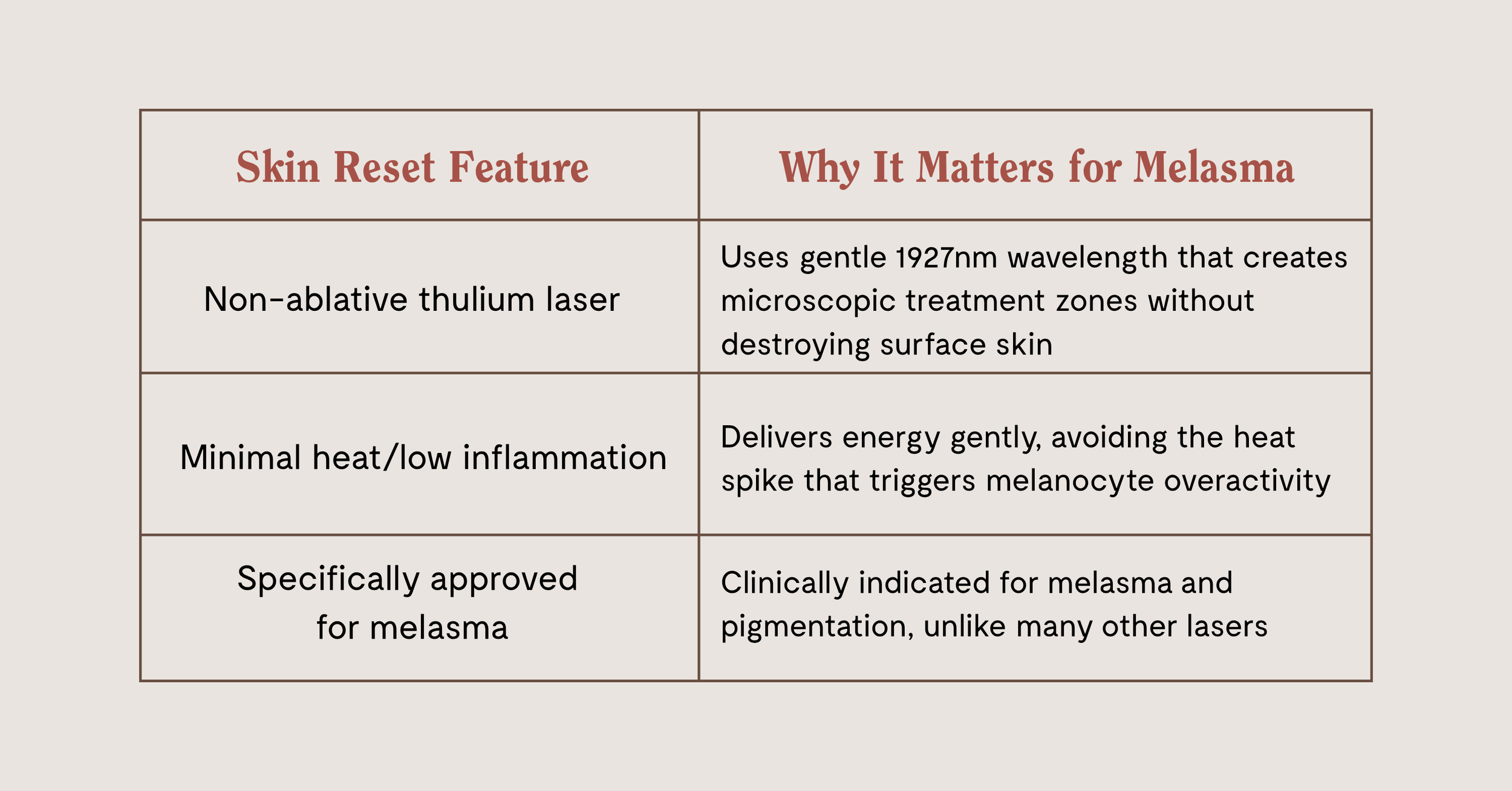
The Skin Reset Ritual targets stubborn pigmentation, including melasma, while also evening out tone, refining texture, and improving skin laxity.
It’s non-ablative, so it doesn’t remove or damage the top layer of the skin. Instead, it works within it to stimulate renewal. And because no harsh peeling is involved (unlike with other traditional resurfacing lasers), it only requires minimal downtime.
Managing melasma for the long run
Light exposure, hormonal fluctuations, and heat are part of daily life—and your skin will respond to them.
Melasma may be persistent, but it can be managed. Rather than completely eliminating it, the goal is to understand what drives yours, reduce those triggers consistently, and treat it at the depth it actually needs.