


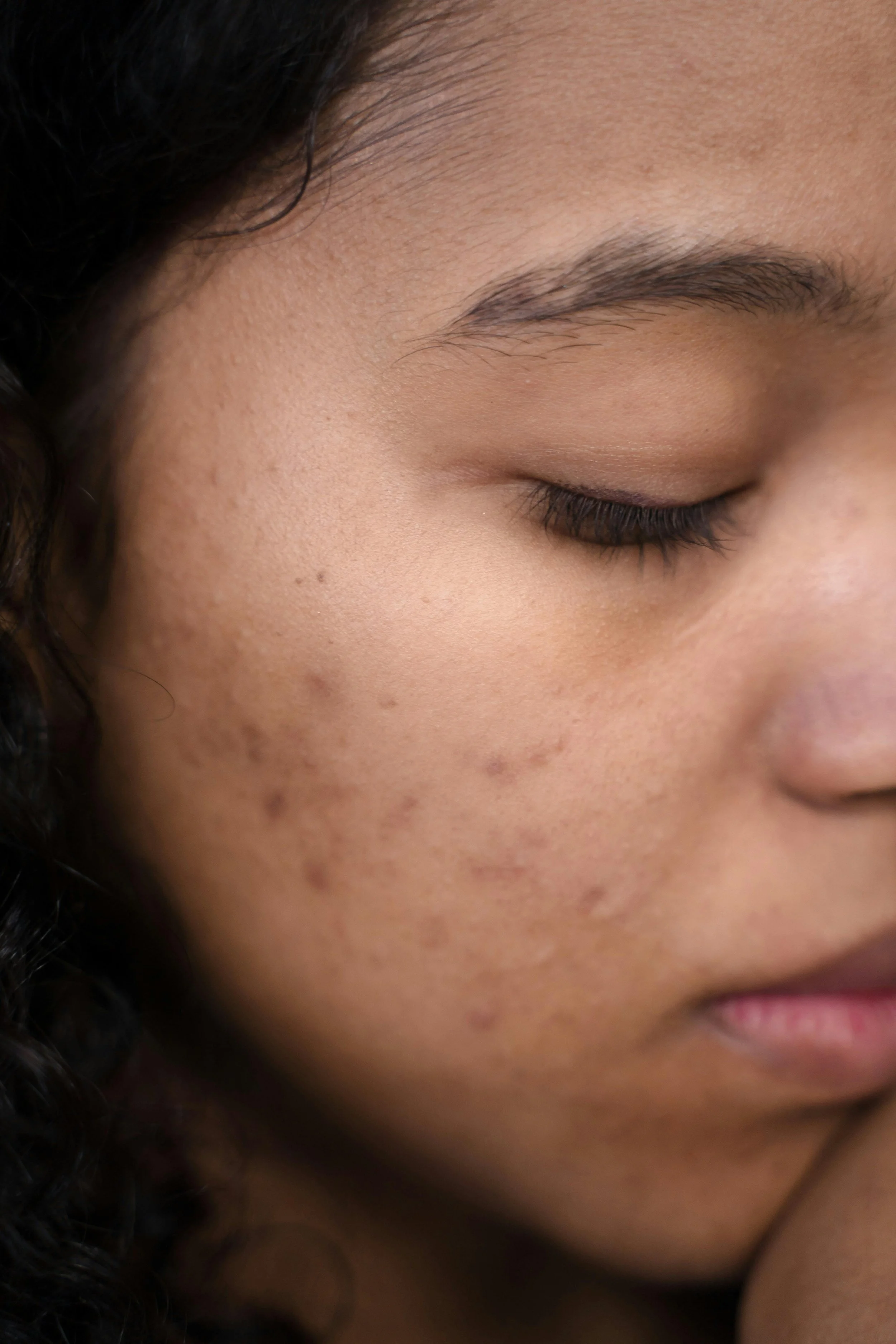
It’s a familiar experience: a breakout finally settles, the inflammation goes down, and the skin feels calm again. But something even more stubborn remains: post-acne marks that seemingly won’t fade.
It can feel like the same issue continuing, but what you’re seeing is a different phase of the skin’s healing process. Understanding this distinction is often the difference between skin that stays “almost clear” and skin that actually moves forward.
Your Routine Might Be Keeping You Stuck
When the breakout disappears, it’s common to stay in “acne treatment mode.” This can look like continued use of strong exfoliants, drying products, or solutions designed to control oil and prevent new pimples.
Post-breakout skin doesn’t need aggressive decongestion; it needs restoration. Over-treating it can prolong the appearance of marks or lead to further irritation.
This is why skin can feel stuck in between—no longer inflamed, but not fully clear either.

Why Marks Tend to Linger Longer
Post-breakout marks don’t sit only on the surface. They’re often tied to pigment that exists deeper within the skin, which is why they take longer to fade.
And while the skin does naturally renew itself, the cycle takes an average of 28-40 days depending on age, skin health, and lifestyle factors.
Sun exposure can also make them appear darker or more persistent over time. Without targeted care, they can remain visible well beyond the life of the acne itself.
What Your Skin Needs After a Breakout
Once a breakout has resolved, the focus should shift from clearing to rebuilding.
At this stage, skin benefits from support: treatments that help stimulate collagen, break down excess pigment, and gradually improve overall tone. The goal is not to strip the skin further, but to guide it back to a more even, balanced state.
Restoring the skin barrier
After breakouts, the skin barrier can feel more vulnerable and reactive. Restoration is about comfort and resilience, helping the skin hold on to hydration and reduce unnecessary stress.
A gentle maintenance facial provides a calm foundation that supports the skin as it rebalances and heals.
Supporting daily repair
Being intentional about what you apply to your face helps the skin recover more steadily. Here’s what to prioritize in your daily routine:
Tyrosinase inhibitors – ingredients like vitamin C and azelaic acid help regulate pigment formation early
Niacinamide – helps calm post-breakout redness and supports barrier repair
Retinoids – support natural skin turnover and gradual fading of marks
Alongside ingredients, consistency matters just as much. A simple routine is often more effective than layering too many products at once. It’s also best to seek professional guidance to ensure actives are used appropriately while the skin is still recovering.
Lastly, daily sunscreen is essential. Even 10 minutes of unprotected sun exposure can overshadow weeks of fading progress.
Encouraging deeper renewal
Marks can become slower to fade even with consistent daily care. This often happens when uneven tone or texture has built up over time. At this stage, skin responds best to treatments that work beneath the surface and target pigmentation at the source.
Laser treatments designed for deeper pigment correction and collagen stimulation can help accelerate visible improvement while supporting long-term skin quality.
It’s about giving your skin the extra momentum it needs to finish the healing process. This approach bridges the gap between topical care and real transformation, helping you finally break the cycle of lingering marks.